
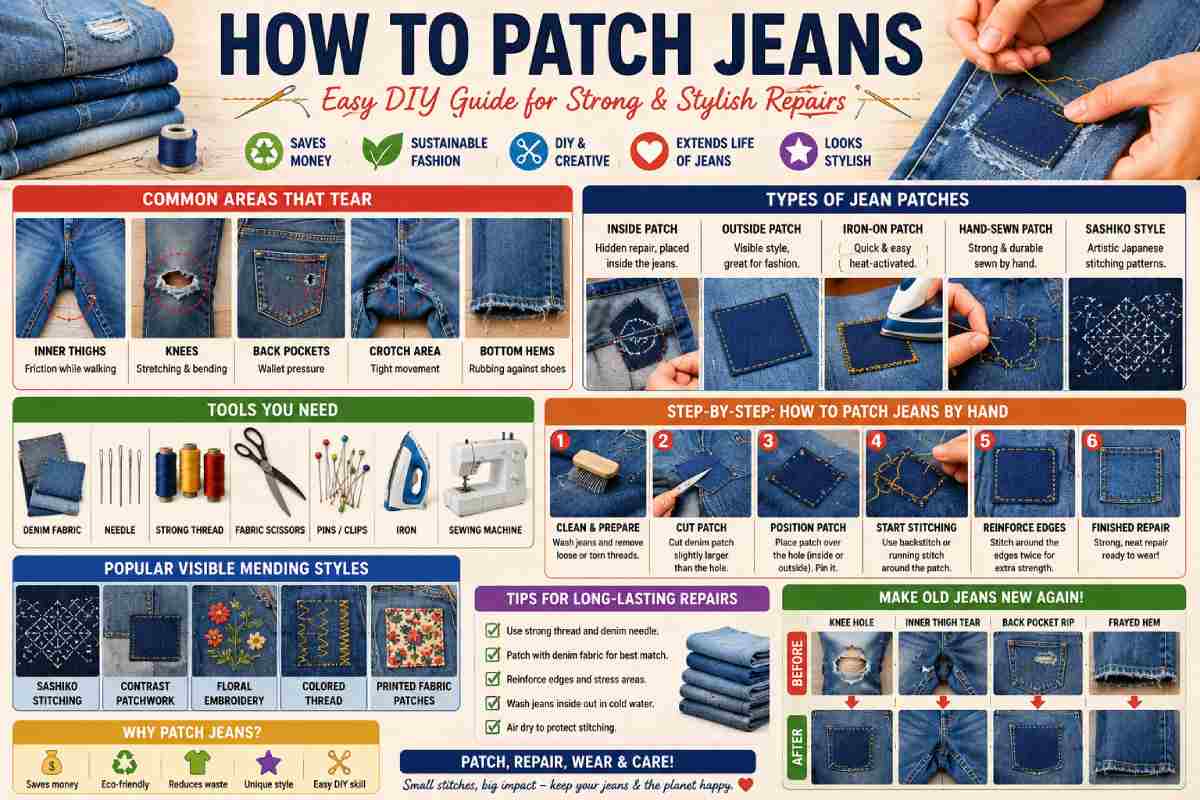
Denim jeans are among the most preferred pieces of attire worn in Italy today. Whether you are a student in Milan or Rome, a tourist, motorcyclist, artist, or office professional, you will always have on your jeans. However, after wearing jeans for some time, the following challenges may be encountered:
- Knee holes
- Inner thigh tears
- Pocket ripping
- Frayed edges
- Crotch damage
- Small cuts and scratches
- Faded or worn-out fabric
Many people throw away damaged jeans immediately. However, patching jeans is actually simple, affordable, and practical. A good repair can extend the life of denim for many more months or even years.
Today, patching jeans is not only about repair. It has also become connected with:
- Sustainable fashion
- DIY clothing culture
- Vintage denim styling
- Upcycling trends
- Visible mending fashion
- European streetwear aesthetics
For some people, patches on jeans are for repairing the damage. Others apply patches to add aesthetic features to their jeans.
In this guide, you will learn everything about patching your jeans at home.
Why Jeans Tear So Easily
Jeans are durable, but certain areas experience constant pressure and movement.
Common Areas Where Jeans Rip
| Area | Main Reason |
| Inner thighs | Friction while walking |
| Knees | Stretching and bending |
| Back pockets | Wallet pressure |
| Crotch area | Tight movement |
| Bottom hems | Rubbing against shoes |
| Side seams | Repeated washing |
Why You Should Patch Jeans Instead of Throwing Them Away
Repairing jeans offers many benefits.
Benefits of Patching Denim
| Benefit | Explanation |
| Saves money | Reduces need for new jeans |
| Sustainable | Helps reduce textile waste |
| Creative style | Makes denim unique |
| Easy DIY skill | Beginner-friendly |
| Longer lifespan | Keeps jeans wearable |
In Europe, many communities related to fashion promote mending clothes rather than throwing them away since sustainable fashion is gaining more and more importance.
Sustainable fashion practices are widely discussed by Good On You
Types of Jean Patches
Different types of denim damage require different repair methods.
- Inside Patch
The patch is placed behind the hole inside the jeans.
Best for:
- Small holes
- Invisible repairs
- Inner thigh damage
- Outside Patch
Patch is stitched visibly outside the jeans.
Best for:
- Fashion styling
- Large holes
- Vintage streetwear looks
- Iron-On Patch
Uses adhesive activated by heat.
Best for:
- Quick repairs
- Beginners
- Temporary fixes
- Hand-Sewn Patch
Patch is sewn manually with a needle and thread.
Best for:
- Strong repairs
- Handmade appearance
- No sewing machine users
- Sashiko Style Repair
Traditional Japanese visible stitching technique.
Best for:
- Artistic denim
- Sustainable fashion
- Thick fabric repairs
Tools Needed to Patch Jeans
You do not need expensive tailoring equipment.
Basic Denim Repair Kit
| Tool | Purpose |
| Needle | Hand stitching |
| Strong thread | Repair stitching |
| Fabric scissors | Cutting patches |
| Denim fabric | Covering holes |
| Pins or clips | Holding fabric |
| Iron | Iron-on patches |
| Sewing machine | Faster repair |
Old denim fabric from damaged jeans works very well for patching because the thickness matches properly.
Best Fabric for Jean Patches
Choosing the right patch material is important.
Good Patch Materials
| Material | Quality |
| Old denim | Excellent |
| Canvas fabric | Strong |
| Cotton twill | Good |
| Thin cotton | Weak |
| Stretch fabric | Moderate |
Heavy denim usually creates the strongest repair.
How to Patch Jeans by Hand
Hand sewing is among the simplest techniques to learn.
Repairing Denim – Instructions
Instruction 1: Washing the Material
Clean your denim material thoroughly prior to repair.
Dirty material weakens the strength of the stitches.
Instruction 2: Cutting Extra Threads
Remove the damaged or torn thread from around the hole.
This will give you a better repair surface.
Step 3: Preparing the Denim Patch
Cut the denim patch larger than the damaged area.
Leave additional cloth at the edges to enable better sewing.
Step 4: Position the Patch
Position the patch:
- Inside for hidden repair
- Outside for visible patchwork style
Use pins to hold it in place.
Step 5: Start Stitching
Common stitching methods include:
- Running stitch
- Backstitch
- Zigzag stitch
Backstitch is often stronger for denim.
Step 6: Reinforce the Edges
Double stitch the patch for added strength.
How to Repair Jeans with a Sewing Machine
Machine repairs usually look cleaner and more professional.
Best Sewing Machine Settings
| Setting | Recommendation |
| Needle | Denim needle |
| Thread | Heavy-duty polyester |
| Stitch type | Straight stitch |
| Stitch length | Medium |
Usage of Iron-on Patches
Iron-on patches are very popular in Europe since they are easy and fast to apply.
Steps
- Turn jeans inside out
- Place patch behind the hole
- Heat the iron
- Press firmly
- Allow patch to cool
- Sew around edges for extra strength
How to Patch Knee Holes
Knee holes are among the most common denim problems.
Best Repair Methods
| Hole Size | Repair Style |
| Small | Darning |
| Medium | Inside patch |
| Large | Visible patch |
Knee repairs are easier when the fabric is opened slightly along the seam.
How to Patch Inner Thigh Tears
Inner thigh damage is very common in slim-fit jeans.
Common Causes
- Walking friction
- Tight jeans
- Thin stretch denim
- Daily wear
Large reinforcement patches usually last longer because nearby fabric may also be weak.
How to Repair Back Pocket Tears
Back pockets often tear because of phones or wallets.
Good Repair Method
- Add patch behind pocket
- Reinforce corners
- Use strong stitching
Grey or blue thread usually blends better with faded denim.
Visible Mending Fashion Trend
Visible mending has become fashionable across Europe.
Instead of hiding repairs, people intentionally display stitching and patchwork.
Popular Visible Mending Styles
| Style | Appearance |
| Sashiko stitching | Artistic Japanese look |
| Contrast denim | Vintage streetwear |
| Floral embroidery | Handmade aesthetic |
| Printed fabric patches | Creative style |
| Colored thread | Decorative repair |
Visible mending combines sustainability with fashion creativity.
Sashiko Denim Repair
Sashiko is a Japanese repair technique that uses decorative stitching patterns.
It usually includes:
- Thick thread
- Repeated stitching
- Geometric patterns
This method creates:
- Strong repairs
- Handmade texture
- Stylish denim appearance
Best Thread for Denim Repair
Strong thread improves repair durability.
Recommended Threads
| Thread Type | Best Use |
| Polyester thread | Strong repairs |
| Denim thread | Professional finish |
| Cotton thread | Hand sewing |
| Embroidery thread | Decorative stitching |
Matching thread color with denim makes repairs less visible.
Common Mistakes When Patching Jeans
Beginner Mistakes
| Mistake | Problem |
| Small patch size | Weak repair |
| Thin thread | Stitch breaks |
| Weak edge stitching | Fraying continues |
| No reinforcement | Hole expands |
| Wrong fabric | Uncomfortable repair |
How to Make Invisible Jean Repairs
Invisible repairs focus on blending repairs naturally into denim.
Helpful Tips
- Use matching denim color
- Match thread carefully
- Sew along denim grain
- Use small stitches
- Patch from inside
This technique works well for minimal visible damage.
Decorative Denim Patch Ideas
Patching jeans can also become a fashion statement.
Creative Patch Ideas
- Floral patches
- Vintage denim scraps
- Music band logos
- Cartoon patches
- Embroidered shapes
- Italian textile fabric
- Printed cotton patches
Best Denim for Repair Work
Thicker denim is usually easier to repair.
Denim Repair Strength Comparison
| Denim Type | Repair Quality |
| Raw denim | Excellent |
| Heavy denim | Very good |
| Stretch denim | Moderate |
| Thin fashion denim | Weak |
How to Prevent Jeans from Tearing
Preventive repairs can extend denim life.
Prevention Tips
- Reinforce inner thighs early
- Avoid excessive washing
- Wash jeans inside out
- Use cold water
- Avoid high dryer heat
Proper denim care reduces fabric stress.
Sustainable Fashion and Denim Mending in Italy
Italy has its own fashion traditions, but sustainable fashion gains greater importance today.
Repairing denim helps:
- Reduce clothing waste
- Save money
- Extend garment life
- Reduce fast fashion consumption
Many people now prefer repairing quality jeans instead of replacing them quickly.
DIY Denim Repair for Students
Students often repair jeans because it is:
- Affordable
- Stylish
- Creative
- Easy to learn
Patched denim is also popular in modern streetwear fashion.
How to Wash Patched Jeans
Denim Washing Tips
| Tip | Benefit |
| Wash inside out | Protects stitching |
| Mild detergent | Gentle on fabric |
| Cold water | Reduces stress |
| Air drying | Extends denim life |
Machine Darning Technique
Machine darning recreates damaged denim texture using repeated stitching.
Advantages
- Strong repair
- Cleaner appearance
- Less visible damage
- Professional finish
This method is common in advanced denim repair.
Creative Patch Ideas for Kids’ Jeans
Children’s jeans tear quickly because of active movement.
Fun Patch Ideas
- Stars
- Animals
- Hearts
- Cartoon shapes
- Colorful fabric patches
Creative patching can make children’s clothing more fun.
Denim Repair for Work Jeans
Work jeans experience heavy daily wear.
Best Repair Methods
| Damage Type | Best Solution |
| Knee tear | Double patch |
| Pocket rip | Reinforced stitching |
| Inner thigh wear | Large inside patch |
| Split seams | Heavy-duty stitching |
Heavy denim patches usually work best for workwear.
Can Tailors Repair Jeans in Italy?
Yes.
Many alteration shops and tailors in Italy offer:
- Invisible denim repair
- Knee patching
- Pocket repair
- Zipper replacement
- Seam reinforcement
Professional denim repair is common in larger cities.
Approximate Jeans Repair Costs in Italy
Prices vary depending on repair quality and city.
Estimated Repair Costs
| Repair Type | Approximate Price |
| Small patch | €5–€15 |
| Invisible repair | €15–€40 |
| Zipper replacement | €10–€25 |
| Pocket repair | €8–€20 |
Professional invisible mending usually costs more.
Why Patched Jeans Became Fashionable
Patched denim has become stylish because it:
- Looks vintage
- Feels unique
- Shows creativity
- Supports sustainability
- Matches streetwear fashion
Many fashion brands now intentionally sell patchwork-style denim.
Difference Between Repaired and Distressed Jeans
| Repaired Jeans | Distressed Jeans |
| Fixed damage | Intentional rips |
| Functional repair | Fashion styling |
| Durable | Sometimes weaker |
| Handmade appearance | Factory-produced look |
Best Colours for Denim Patches
Matching Patch Colours
| Jean Colour | Best Patch Match |
| Dark blue | Dark denim |
| Light blue | Light denim |
| Black jeans | Black fabric |
| Grey jeans | Grey denim |
Contrast patches also create fashionable styles.
How Long Do Jean Repairs Last?
Repair lifespan depends on:
- Fabric quality
- Stitch strength
- Washing habits
- Patch size
Strong repairs can last for years.
Hand Stitch vs Machine Stitch
| Hand Stitch | Machine Stitch |
| Slower | Faster |
| Handmade appearance | Cleaner finish |
| Budget-friendly | Requires machine |
| Good for beginners | Professional results |
Trendy Denim Repair Ideas
Popular Repair Styles
- Sashiko stitching
- Contrast patchwork
- Embroidered flowers
- Raw edge patches
- Minimal visible stitching
- Mixed fabric repair
Denim Upcycling Ideas
Old jeans can be reused for:
- Bags
- Shorts
- Cushion covers
- Aprons
- Jackets
- Future repair patches
Small denim scraps are very useful for DIY repair projects.
How Social Media Influenced Denim Repair
Instagram, Pinterest, TikTok, and YouTube helped make denim repair fashionable again.
People now share:
- DIY tutorials
- Sashiko videos
- Vintage denim restoration
- Creative patchwork ideas
Beginner-Friendly Jeans Repair Method
For beginners:
- Use an inside patch
- Stitch slowly by hand
- Match denim color
- Reinforce edges properly
- Practice on old jeans first
Common Questions About Patching Jeans
Can patched jeans still look fashionable?
Yes. Patched denim is popular in both vintage and streetwear fashion.
Are iron-on patches durable?
They work well for quick repairs, but stitching makes them stronger.
What is the strongest denim repair method?
Machine darning with reinforcement patches is usually strongest.
Can beginners repair jeans?
Yes. Basic hand stitching is beginner-friendly.
Is repairing jeans cheaper than buying new ones?
Usually yes. Repairing denim is often more affordable.
Can stretch jeans be patched?
Yes, but stretch denim requires flexible stitching.
Should patches go inside or outside?
Inside patches look cleaner, while outside patches create visible style.
What is visible mending?
Visible mending intentionally highlights repairs instead of hiding them.
Can tailors perform invisible denim repairs?
Yes. Many professional tailors offer invisible denim mending.
How can I stop jeans from tearing again?
Reinforce weak areas early and avoid excessive friction.
Conclusion
Patching jeans is one of the most useful and practical DIY clothing skills people can learn. Instead of throwing away damaged denim, simple repairs can extend the life of jeans while saving money and reducing textile waste.
Today, patched jeans are not viewed only as repaired clothing. Denim repair has become part of sustainable fashion, vintage aesthetics, and creative self-expression across Europe. From invisible inside patches to decorative sashiko stitching, there are many ways to repair denim depending on personal style and comfort level.
Whether using hand stitching, sewing machines, or iron-on patches, learning how to repair denim helps give old jeans a second life. With patience and the right materials, even beginners can repair ripped jeans successfully at home.
For students, fashion lovers, workers, and DIY enthusiasts in Italy, patching jeans is affordable, practical, environmentally friendly, and stylish.