
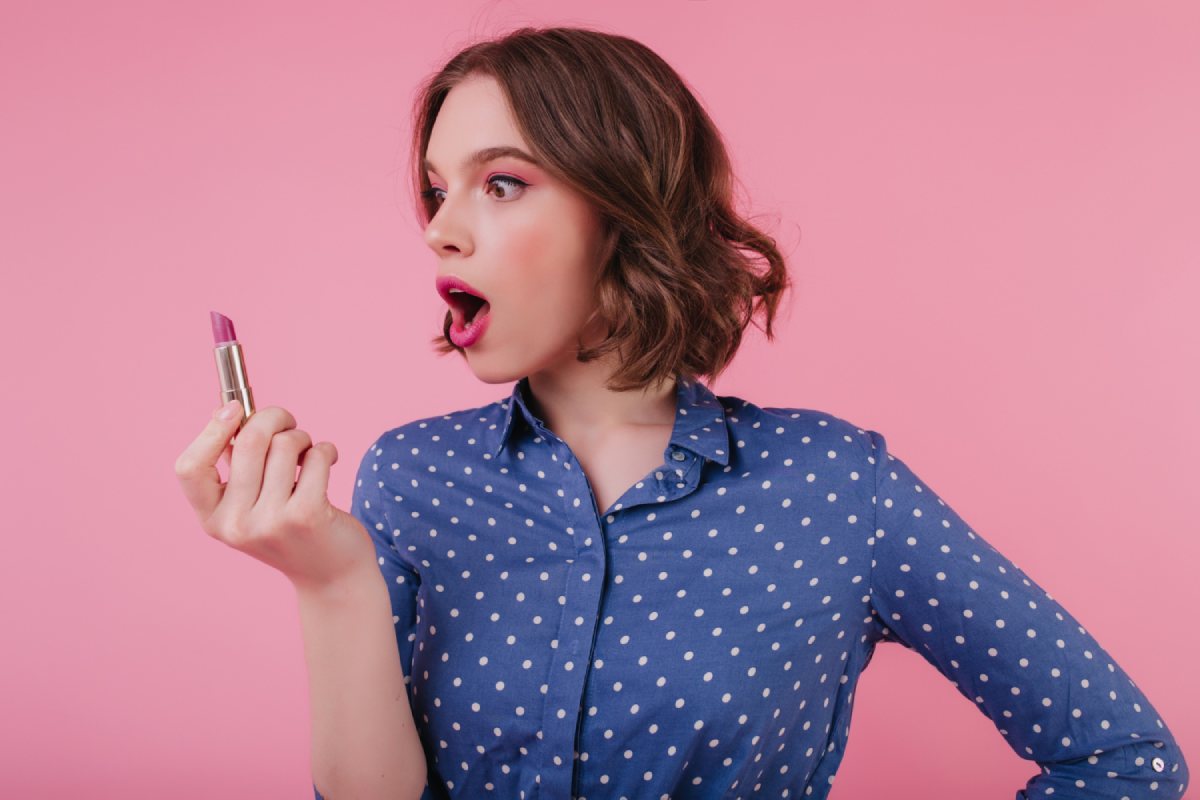
Nothing is worse than shelling out good bucks for a lipstick shade that looks amazing on you at the checkout or on the website only to come home and find it makes you look pale, tired, or just “off.” The shade itself is beautiful—everyone else looks great in it—but when you try it, it falls flat.
Don’t blame the lipstick yet. And while you might think there are certain colors that just don’t work on you, you’ll want to consider why some shades work and others don’t in the first place. It turns out the answer is typically not in the lipstick itself but through a group of factors coming together.
Table of Contents
Your Undertone Is Everything
Skin undertone is perhaps the most important in ensuring whether or not lipstick shade works for you. The problem with skin undertone is that it’s not the same as skin color—even in the context of light versus dark. Instead, it’s the tint underneath the color—which means that a person can have dark skin and a cool or warm undertone and someone can have fair skin and neutral undertones.
Most people have warm (yellow/golden), cool (pink/blue) or neutral (both) undertones. This means that if you’re warm undertones but try to wear something with a blue base, it’s going to feel “off” even if you can’t put your finger on what’s wrong.
Furthermore, if you’re warm undertones, the peachy/coral/orange/warm reds work for you and for cools, you get away with berry/plum/bluish red/rosy pink. But the issue is that no one knows their true undertone. And even those who do have different intensities within subcategories.
Tooth Color Changes Everything
This is the factor no one ever thinks about until they see it for themselves: your tooth color truly impacts how lipsticks look. This is especially true for bold or darker colors that draw more attention to your mouth.
The problem becomes that different shades highlight different tooth discolorations. For example, blue-based reds and deep berries can make teeth look whiter because of the contrast against the hues—but they also make yellow teeth yellower—and stained teeth even more so.
The role of the dental professional comes into play here; when you work with a teeth whitening dentist, your range of choices expands exponentially. When your teeth are brightened by a professional teeth whitening dentist, this lets you wear colors that would otherwise be deemed unwearable. Lipstick shades that draw too much emphasis to tooth color when they’re not truly white can be risky in the hands of someone with stained or yellow teeth.
Lip Pigmentation and Texture
Your own lip pigmentation impacts how lip colors wear as well. Someone who has red tinted lips naturally may find that sheer or lighter lipsticks hardly wear at all or vice versa if someone has very light lips; it’s too pigmented.
This is why swatch pictures aren’t always reliable; on someone else’s lips, the pigment shows through but on your own lips, it mixes with what you already have to create something new. Highly pigmented lips need highly pigmented formulas to create true-to-tube formulas.
Lip texture matters as well—dry, cracked, or peeled lips make all formulas look worse. In particular, dark shades showcase texture concerns; a dark berry may look luscious but on cracked lips, it looks horrendous. Caring for your lips goes beyond comfort; it goes into creating a situation where lipstick can succeed.
The Lighting and Formula Problem
Store lighting can be notoriously bad for looking at shade colors—especially when fluorescent lighting washes out warm tones and makes cool tones more present. This can be a shock in natural lighting when you go outside to see how horrible (or amazing) what you bought actually looks.
Additionally, sometimes the issue isn’t the color but the formula; for example, when a satin is appealing and a matte version sucks—this occurs as well. Glossy formulas change how light hits the pigments and sheer formula invites your natural pigment too much into the equation to even matter.
Your Overall Coloring
If nothing else, people are attracted to colors in their own overall coloring—based on hair and eyes. Those with very high contrast (very dark-haired and very light-skinned) can pull off bolder lip shades than those who don’t have as much contrast between features.
Someone with red hair may look amazing in coral shades while someone with dark hair might need more neutral tones in their nudes to avoid washout—but these are preferences not rules.
Finding What Actually Works
Eventually, trial and error provides answers but until then, recognizing why things are working or not makes it slightly less random. If a color doesn’t work, ask why; does it conflict with an undertone? Is it too blue-based? Is tooth discoloration overpowering? Does lip pigmentation change its appeal?
Sometimes all it takes is one adjustment—better lips, whitened teeth, different finish—but other times, certain standards aren’t meant to be worn despite how trendy they may be.
In conclusion, the best lipsticks are those that work with your natural constituents instead of working against them; when everything else is aligned—undertones/depth of color/lip condition/whiteness of teeth—even bold or questionable choices can be made surprisingly wearable.