
Table of Contents
Introduction
Many women track their menstrual cycle and expect it to follow the same pattern every month. A common cycle length is around 28 days, but in reality cycles can change slightly over time. If your cycle suddenly becomes 31 days instead of 28, it can feel confusing or worrying.
However, small changes in cycle length are very common. The female body is influenced by hormones, lifestyle, stress, sleep, diet, and many other factors.
Understanding why your cycle changed can help you stay calm and take the right steps if needed.
This guide explains possible reasons why your cycle changed from 28 to 31 days, when it is normal, when you should see a doctor, and how to keep your cycle healthy.
Understanding the Menstrual Cycle
The menstrual cycle is the monthly process that prepares the female body for pregnancy.
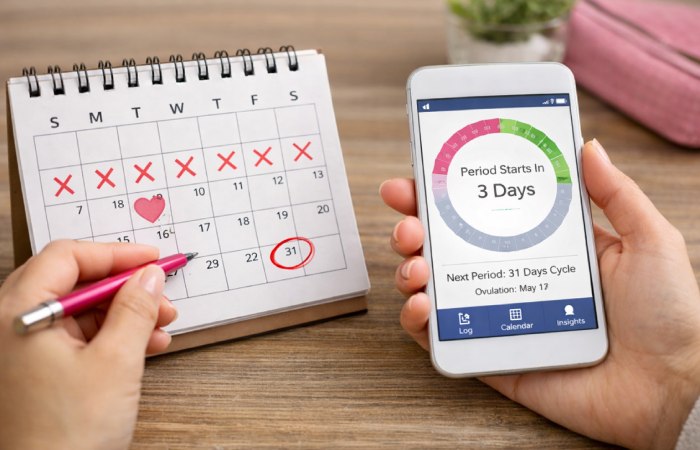
The cycle begins on the first day of your period and ends the day before the next period starts.
The body goes through several hormonal stages during this time.
Menstrual Cycle Phases
| Phase | What Happens | Average Duration |
| Menstrual Phase | Bleeding occurs | 3–7 days |
| Follicular Phase | Egg begins developing | 7–10 days |
| Ovulation Phase | Egg released from ovary | 1 day |
| Luteal Phase | Body prepares for pregnancy | 12–14 days |
The entire cycle usually lasts 21–35 days, which means a 31-day cycle is still considered normal.
Is It Normal for a Cycle to Change?
Yes. Cycle length can change during different stages of life.
Most women do not have the exact same cycle length every month.
Normal Cycle Variation
| Cycle Length | Considered Normal? |
| 21 days | Normal |
| 24 days | Normal |
| 28 days | Common average |
| 31 days | Normal |
| 35 days | Still normal |
A change of 2–4 days is usually not a health problem.
Difference Between a 28-Day Cycle and 31-Day Cycle
A 3-day difference may simply mean ovulation happened slightly later.
Comparison
| Factor | 28-Day Cycle | 31-Day Cycle |
| Average ovulation day | Day 14 | Day 17 |
| Luteal phase | 14 days | 14 days |
| Hormone timing | Slightly earlier | Slightly later |
| Pregnancy chance | Same | Same |
| Health concern | Usually none | Usually none |
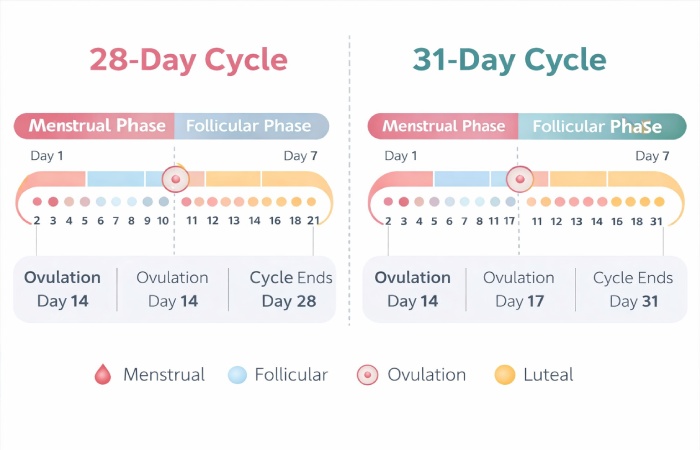 In many cases, the body simply adjusts hormone timing.
Common Reasons Your Cycle Changed
There are several possible reasons for a small change in cycle length.
1. Hormonal Fluctuations
Hormones control the menstrual cycle.
Even small hormonal shifts can delay ovulation and extend the cycle.
Important Hormones
| Hormone | Function |
| Estrogen | Builds uterine lining |
| Progesterone | Supports pregnancy |
| LH | Triggers ovulation |
| FSH | Stimulates egg development |
If ovulation happens later, the cycle becomes longer.
2. Stress
Stress is one of the most common reasons for menstrual changes.
Stress affects the hypothalamus, the part of the brain that controls hormones.
Stress Impact on Cycle
| Stress Level | Possible Effect |
| Low stress | Little change |
| Moderate stress | 1–3 day delay |
| High stress | Missed or late period |
3. Changes in Sleep
Sleep plays an important role in hormone balance.
Poor sleep or irregular sleep schedules can delay ovulation.
Example:
| Sleep Pattern | Cycle Impact |
| Regular sleep | Stable cycle |
| Late nights | Slight delay |
| Shift work | Irregular cycle |
4. Changes
Sudden changes in diet can affect the menstrual cycle.
Nutrition affects hormone production.
Important Nutrients
| Nutrient | Role in Cycle |
| Iron | Prevents fatigue |
| Vitamin D | Hormone balance |
| Magnesium | Reduces cramps |
| Healthy fats | Hormone production |
5. Weight Changes
Rapid weight loss or weight gain can affect ovulation.
Weight Impact on Cycle
| Weight Change | Possible Effect |
| Small change | Minor cycle shift |
| Weight gain | Hormone imbalance |
| Weight loss | Ovulation delay |
6. Exercise Changes
Physical activity influences hormone levels.
| Exercise Level | Cycle Effect |
| Moderate exercise | Healthy cycle |
| Heavy training | Delayed ovulation |
| Sudden exercise increase | Temporary cycle change |
7. Age and Hormonal Changes
Menstrual cycles change naturally with age.
Age and Cycle Length
| Age Group | Cycle Pattern |
| Teens | Irregular cycles |
| 20–30 | Stable cycles |
| 30–40 | Slight variation |
| 40+ | Hormonal changes |
8. Birth Control Changes
Starting or stopping birth control can change cycle length.
Birth Control Impact
| Method | Possible Effect |
| Birth control pills | Regulated cycle |
| Stopping pills | Temporary changes |
| IUD | Lighter periods |
| Hormone injection | Irregular cycle |
When Should You Be Concerned?
A small change like 28 to 31 days is usually harmless.
However, certain symptoms may require medical advice.
Warning Signs
| Symptom | Possible Concern |
| Cycles longer than 40 days | Hormone imbalance |
| Very heavy bleeding | Medical issue |
| Severe pain | Endometriosis |
| Missed periods | Pregnancy or hormonal issue |
Cycle Length Statistics
Research shows that menstrual cycles vary among women.
Average Cycle Length Study
| Cycle Length | Percentage of Women |
| 26–28 days | 32% |
| 29–31 days | 28% |
| 32–35 days | 20% |
| Less than 26 | 10% |
| More than 35 | 10% |
This shows that 31-day cycles are very common.
How to Track Your Cycle
Tracking helps understand patterns and detect changes.
Cycle Tracking Methods
| Method | Advantages |
| Calendar | Simple |
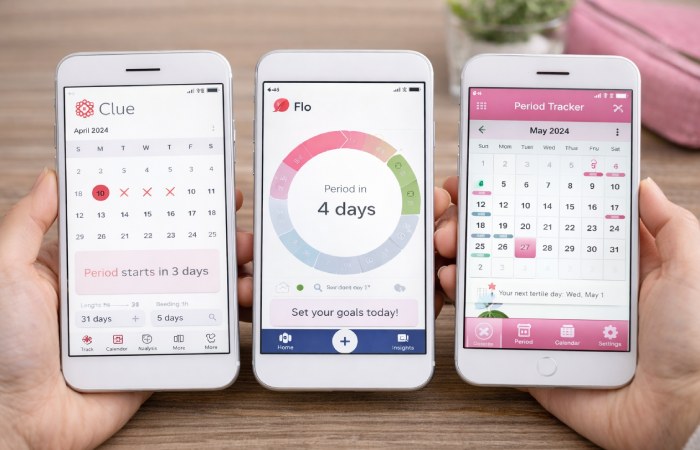
| Mobile apps | Automatic predictions |
| Basal temperature | Accurate ovulation tracking |
| Ovulation kits | Hormone detection |
Popular cycle tracking apps include:
- Clue
- Flo
- Period Tracker
Lifestyle Tips for a Healthy Cycle
Healthy habits support hormone balance.
Healthy Cycle Habits
| Habit | Benefit |
| Balanced diet | Hormone support |
| Regular exercise | Stable cycle |
| Stress management | Prevent delays |
| Quality sleep | Hormone regulation |
Foods That Support Hormonal Balance
Certain foods may support menstrual health.
| Food | Benefit |
| Leafy greens | Iron and magnesium |
| Nuts and seeds | Healthy fats |
| Fish | Omega-3 |
| Whole grains | Stable blood sugar |
Natural Ways to Support Regular Cycles
Some natural habits help maintain cycle balance.
Natural Support Methods
| Method | Benefit |
| Yoga | Stress reduction |
| Meditation | Hormone balance |
| Hydration | Overall health |
| Sunlight | Vitamin D production |
Common Myths About Cycle Length
Many myths exist about menstrual cycles.
| Myth | Reality |
| Cycle must be 28 days | False |
| Late cycle means pregnancy | Not always |
| Exercise stops periods | Only extreme cases |
| All women have same cycle | Incorrect |
When to Visit a Doctor
You should consult a doctor if:
- cycles suddenly change drastically
- periods stop for several months
- severe pain occurs
- bleeding is extremely heavy
Doctors may perform tests such as:
| Test | Purpose |
| Hormone blood test | Check hormone levels |
| Ultrasound | Check reproductive organs |
| Thyroid test | Detect thyroid issues |
Frequently Asked Questions
Is a 31-day cycle normal?
Yes. Cycles between 21 and 35 days are considered normal.
Can stress delay my period?
Yes. Stress can delay ovulation and lengthen the cycle.
Does a longer cycle affect fertility?
Not necessarily. Ovulation simply happens later.
Can diet affect menstrual cycles?
Yes. Poor nutrition can influence hormone levels.
Final Thoughts
A change from a 28-day cycle to a 31-day cycle is usually normal and not a cause for concern. Many factors can influence cycle length, including stress, sleep, diet, exercise, and hormonal fluctuations.
The most important thing is to observe patterns in your cycle and maintain a healthy lifestyle.
If changes become frequent or are accompanied by unusual symptoms, consulting a healthcare professional is the best step.
Understanding your body helps you manage your reproductive health with confidence.